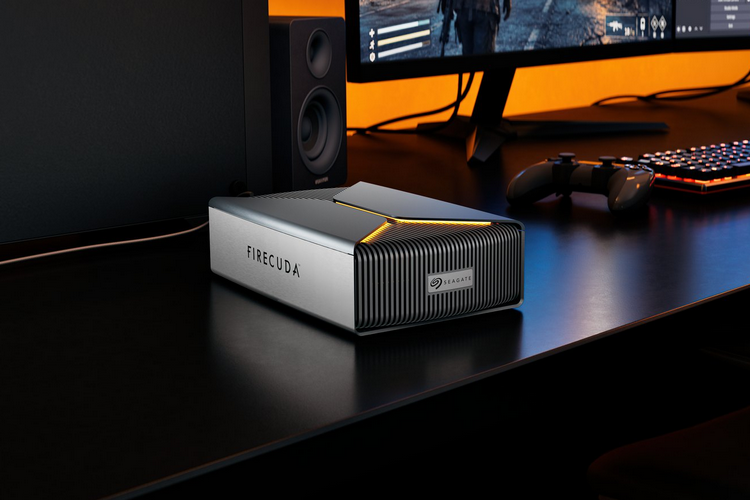
External SSDs are great for offloading large files from your the onboard storage of your PC or laptop. Problem is, they’re expensive as heck, which is why many folks who need to store large files still use old-school hard drives. Of course, when you use hard drives, it’s jarring how slow they feel when you’ve been used to working with SSDs in the last decade. The Seagate FireCuda Forge offers an external storage that combines the best parts of hard drives and SSDs into one.
How? Well, instead of housing an SSD or an HDD, it’s designed to house both. The HDD is the main storage, while the SSD serves as a high-speed access point, with the system autonomously deciding which files to put on the SSD at any point to speed up your own work processes.
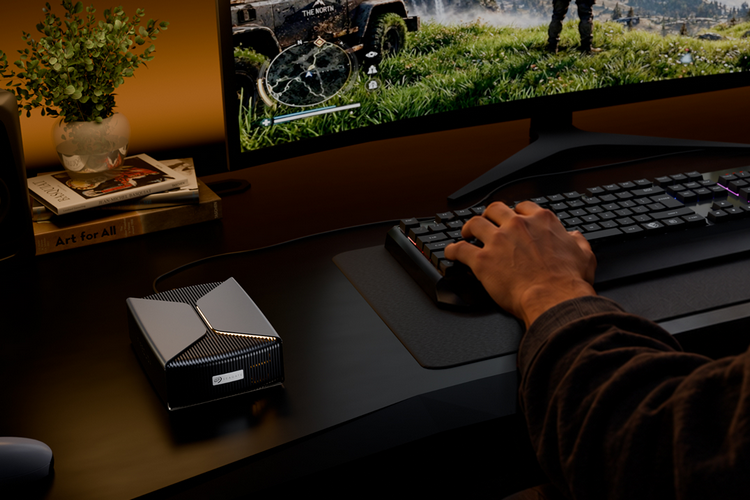
The Seagate FireCuda Forge’s idea of combining hard drives and flash drives in one enclosure isn’t exactly new. In fact, they’ve done this with numerous products for several years now. What’s different here is the inclusion of the outfit’s Alkemi technology, a software layer that identifies files you’re going to use and copies those into the SSD for faster access, while keeping less-active files on the hard drive. They call it a storage engine: one that performs dynamic caching on its own, so users don’t even have to think about it, while enjoying both the generous capacity of HDDs and the fast read/write speeds of SSDs.
How does it decide which files to cache? According to the outfit, it uses a machine learning algorithm that can identify what processes your PC is running and what types of files it will require. It then proceeds to find those files, copies them on the NVME SSD, and redirects all read/write operations on the file to the faster flash storage. Everything is done dynamically, by the way, so as far as the user is concerned, they only have to deal with one drive, with the system doing all the work in the background. Obviously, this thing’s performance will depend on how good the AI algorithm actually is, so it will be interesting to see reviews of this thing once it comes out.
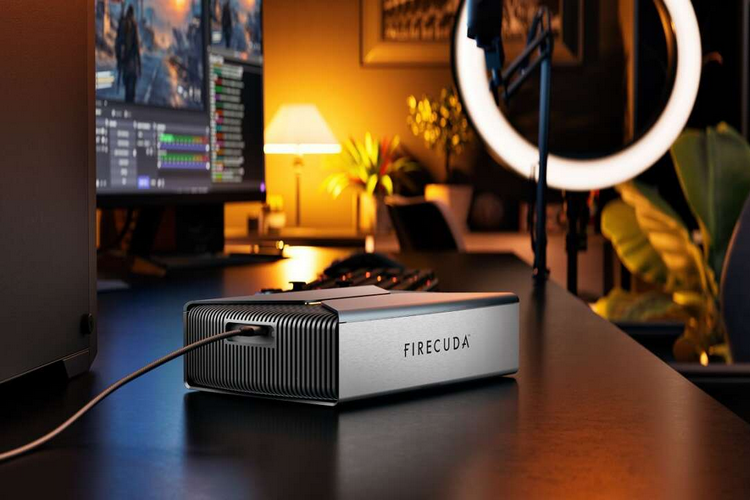
The Seagate FireCuda Forge comes in two HDD capacities: 20TB and 8TB. Sadly, the device doesn’t come with its own SSD. Instead, it only has a NVME slot, so users can put in their own SSDs into it. Why? Probably due to how expensive SSDs currently are. Going this route means you can use an SSD from your old mini-PC and put it in this thing instead. Since, it’s just meant for caching, the system will work with an older 256GB SSD in there. The system, however, supports up to 1TB NVME SSD storage, which it can access at speeds of up to 2,500 MB/s for reads and 2,000 MB/s for writes.

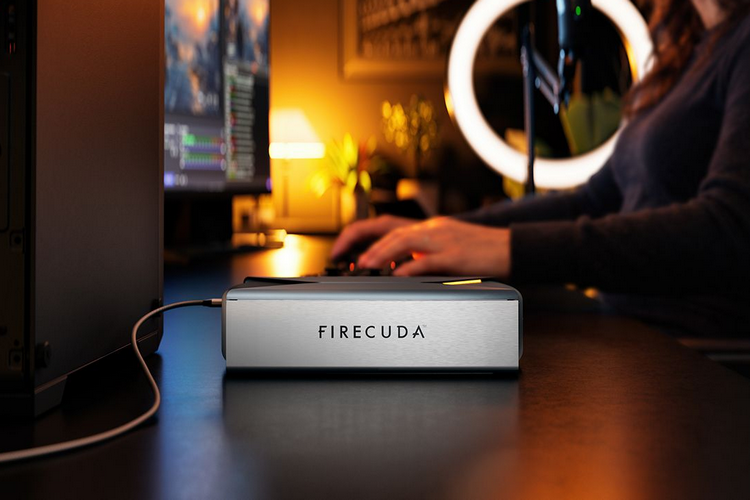
The external drive connects to your computer via USB-C, although it requires an external power adapter since the HDD will need a bit of power to get all those discs spinning. It supports Windows 11 and macOS 26 and up.
The Seagate FireCuda Forge is available now, priced at $699 for the 8TB and $899 for the 20TB.